
Background
Namibia, one of southern Africa's driest countries, faces severe water security risks due to climate change, population growth, urbanization, and limited inland water resources. Diversifying water resources and reusing treated wastewater offers a sustainable solution to water scarcity. With existing wastewater pond systems holding significant potential, about 37% of municipal wastewater could be reused. However, scaling up is hindered by outdated infrastructure, limited technical skills, inadequate management, insufficient funding, and fragmented policies.
The joint development of a water reuse strategy for Namibia by Namibian and German partners is an important step for advancing climate resilience, water security, and food security.
Within the transdisciplinary framework of WaReNam, scientists, policymakers, and representatives from administration and industry in Germany and Namibia collaborate to establish effective governance structures, develop tailored capacity-building approaches, and test water reuse technologies for agriculture and industry. The project uses the living lab approach to foster knowledge co-creation in a flexible, experimental environment.
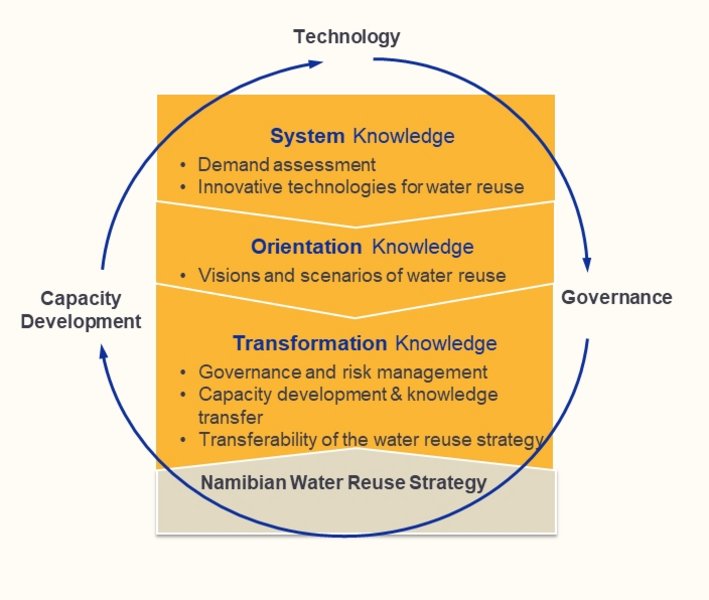
Key elements of the project include: